Twilight Wedding Photography
Twilight portraits are the ten or fifteen minutes at the end of the day when the light does something it has not done all afternoon. They are the pictures couples most often tell me they were not expecting, and very often the ones that end up printed on a wall, or given a full spread in your wedding album.
I am Dave, a documentary wedding photographer in West Yorkshire. This page is about what twilight portraits actually are, when they happen at your wedding, and how to make sure the day leaves room for them – because the one thing they need is fifteen minutes nobody has already spent.
Twilight Portraits at a Glance
What Twilight Actually Means
“Twilight” covers three quite different windows, and they do not look remotely alike. Knowing which one you are likely to get is most of the planning.
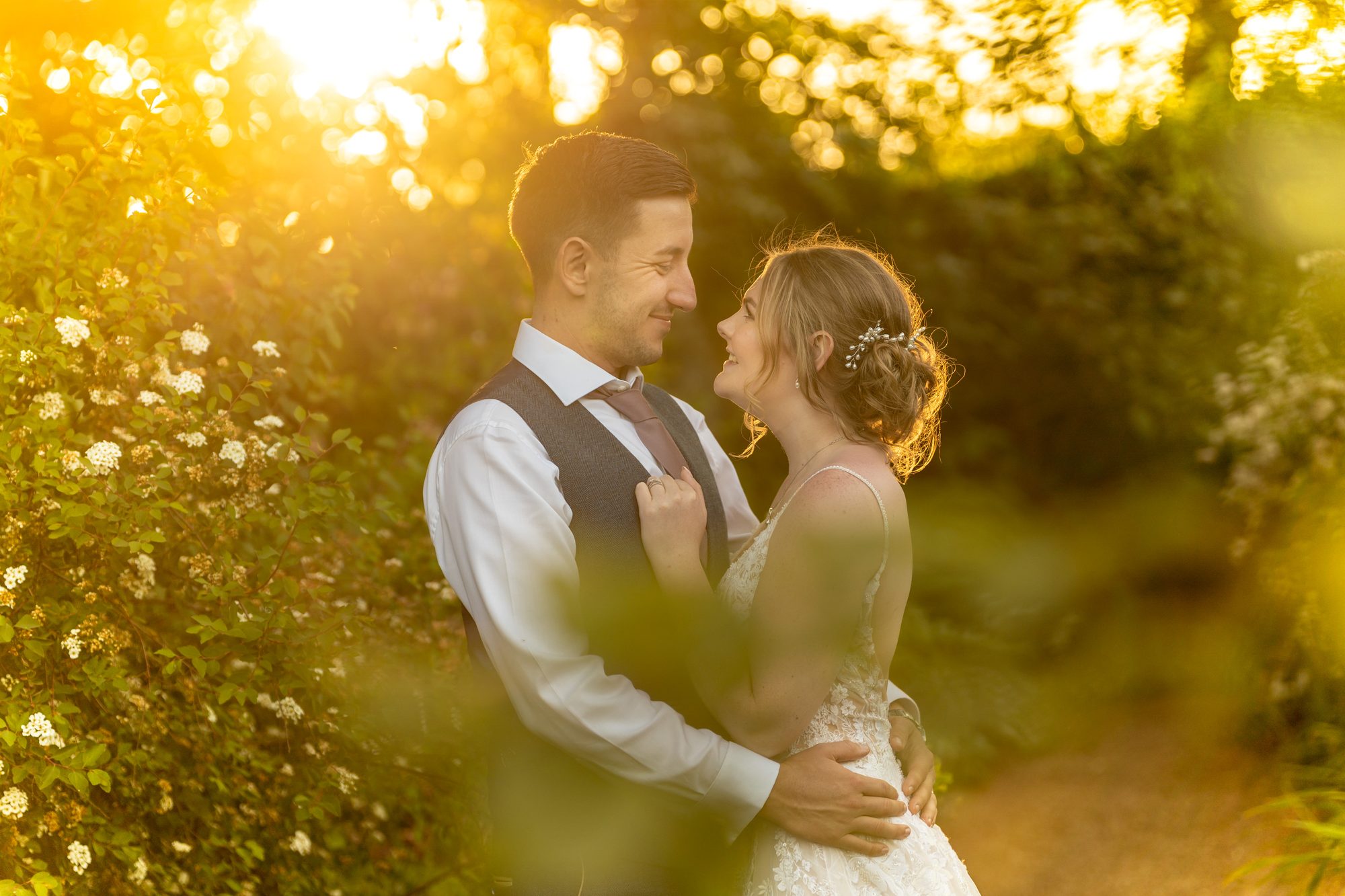
Golden hour is the hour or so before the sun goes down. It is low, warm and extremely kind to everybody, and it needs no equipment at all – just the two of you and somewhere facing the right way.
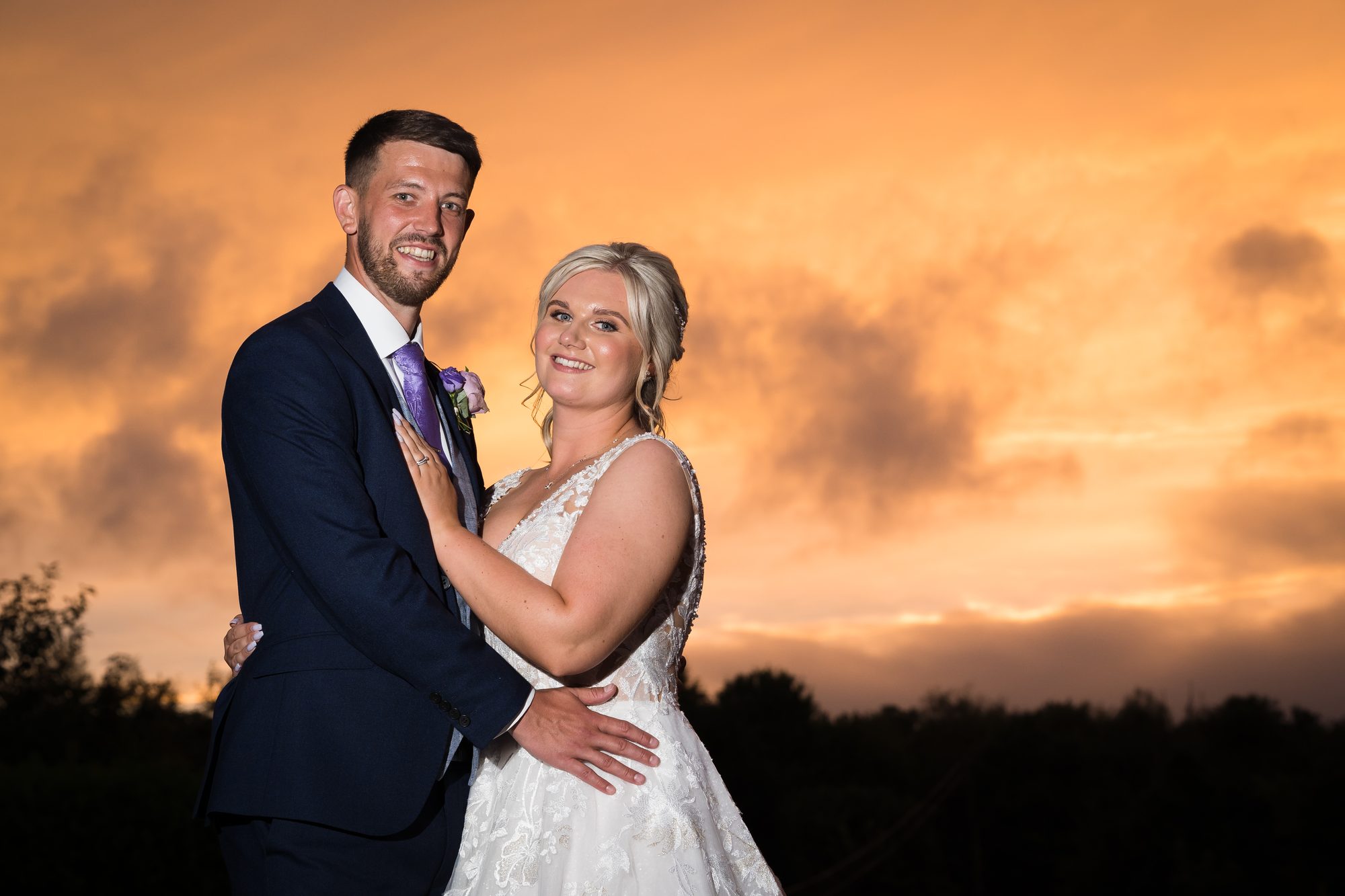
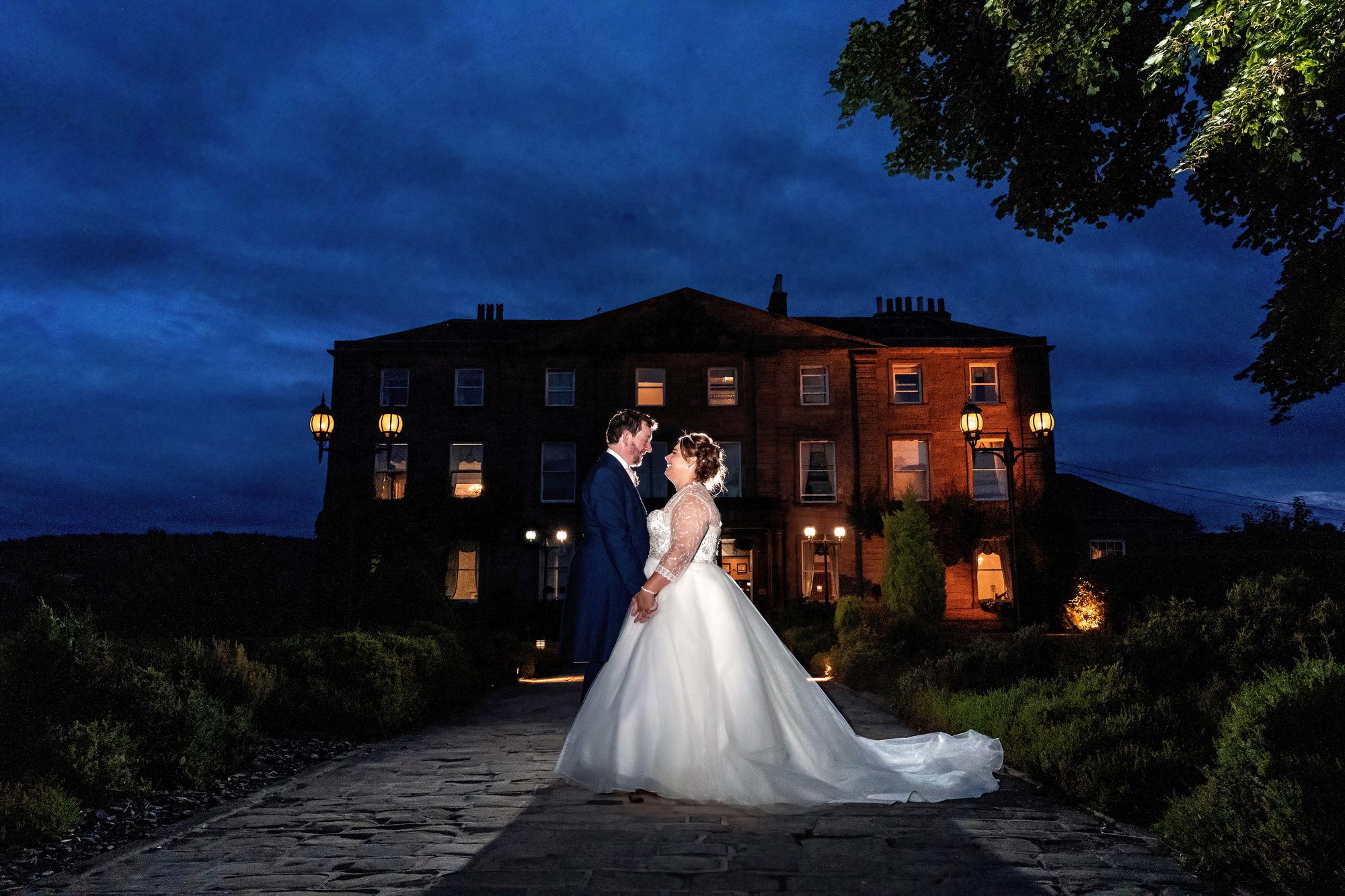
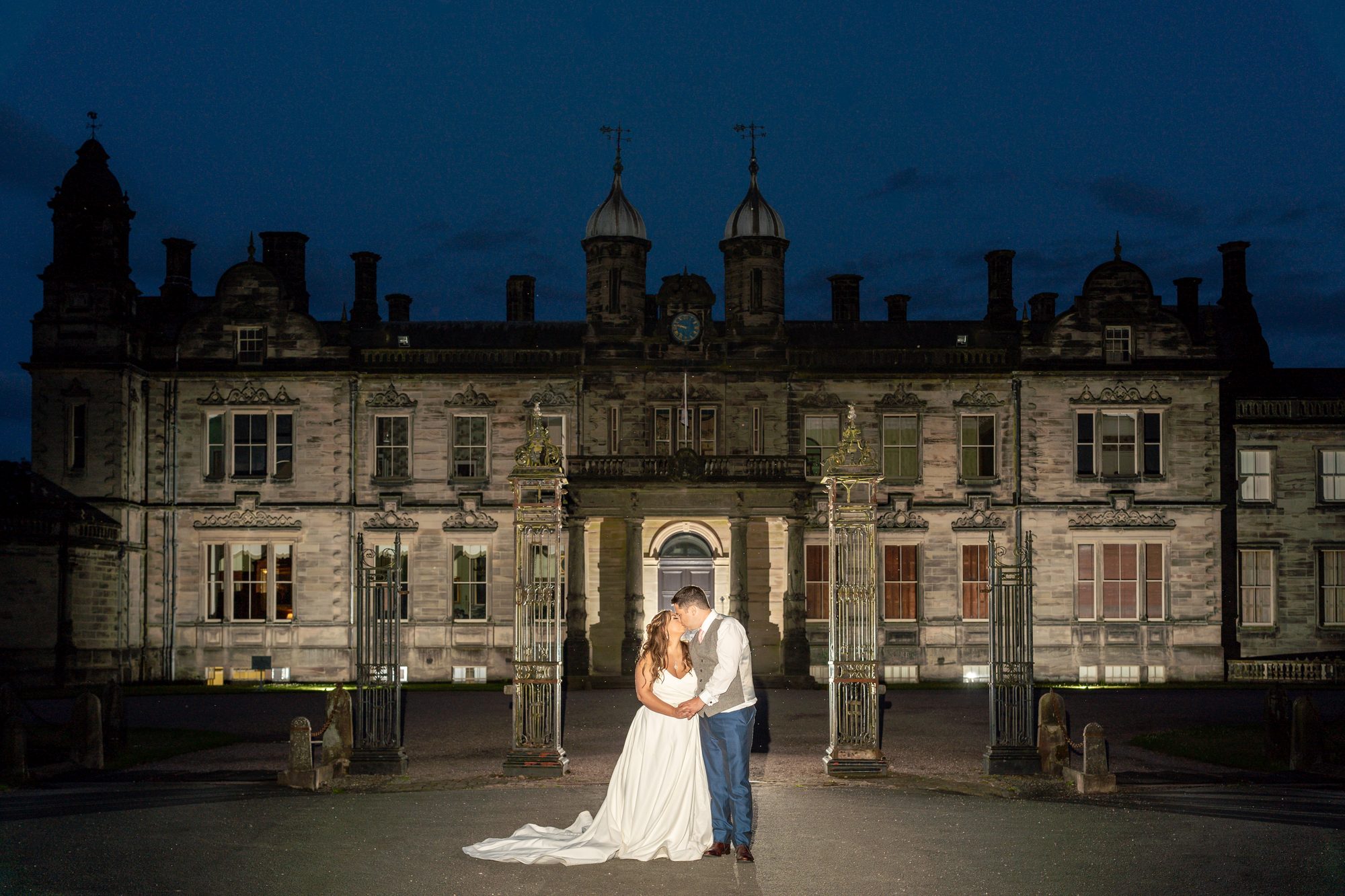
Blue hour is the twenty to forty minutes after sunset. The sky turns a deep blue the eye barely registers but the camera loves, and the venue’s own lights come on at the same time. Most of the pictures on this page were taken in that window.
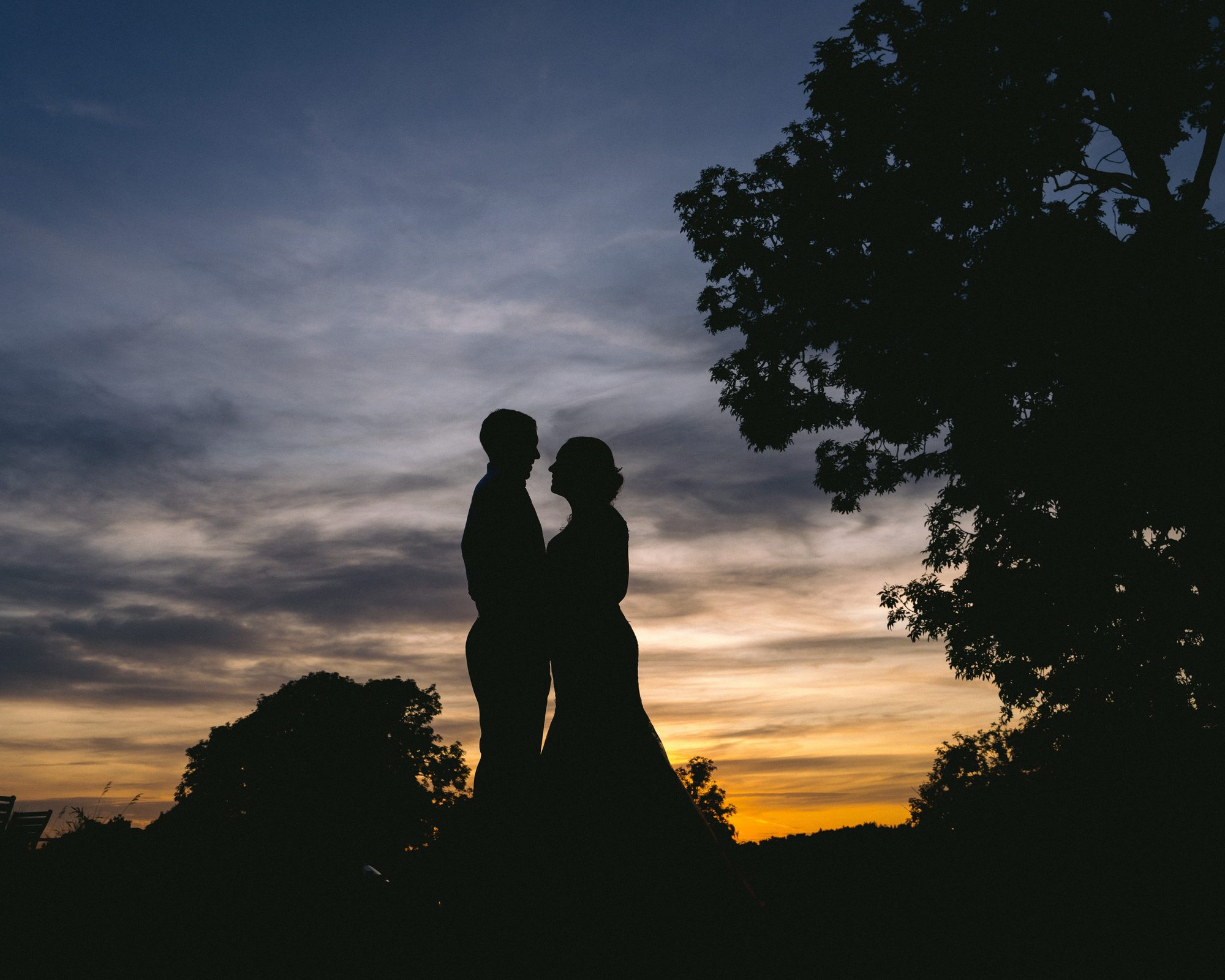
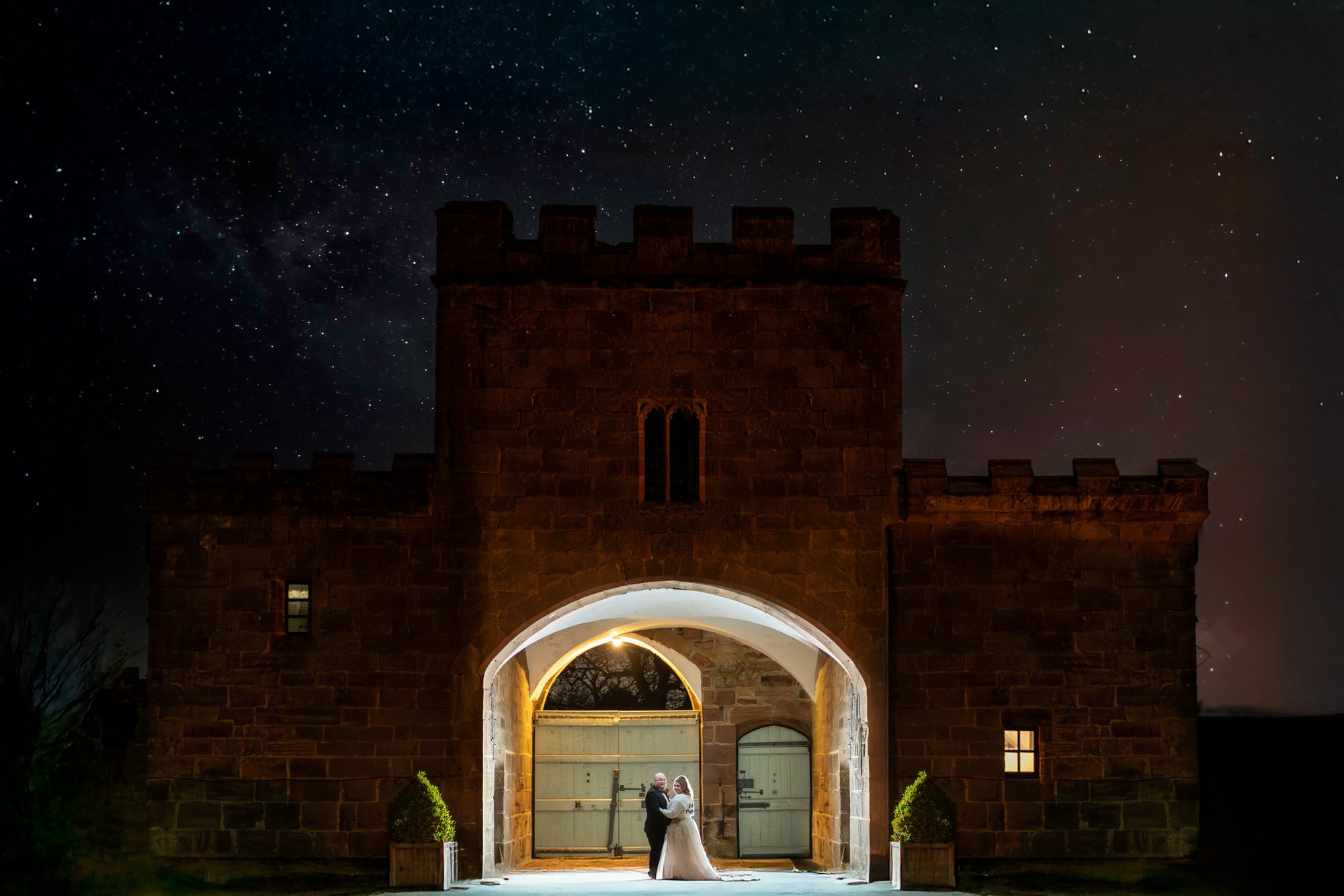
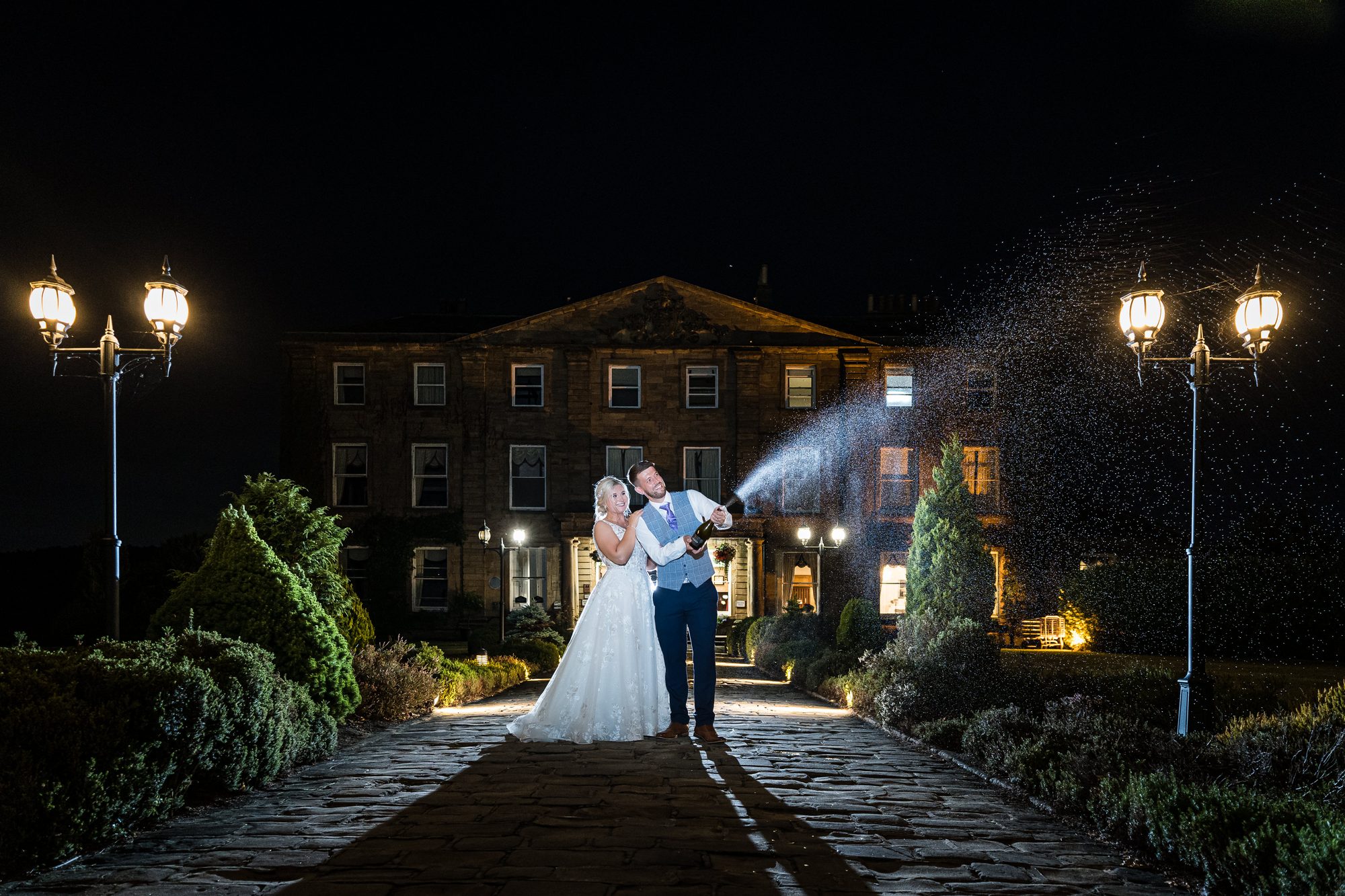
Full dark is everything after that. Nothing is lit unless we light it, which sounds like a limitation and is really the opposite – a dark background hides the car park, the marquee pegs and the catering van, and leaves only what I choose to put light on.
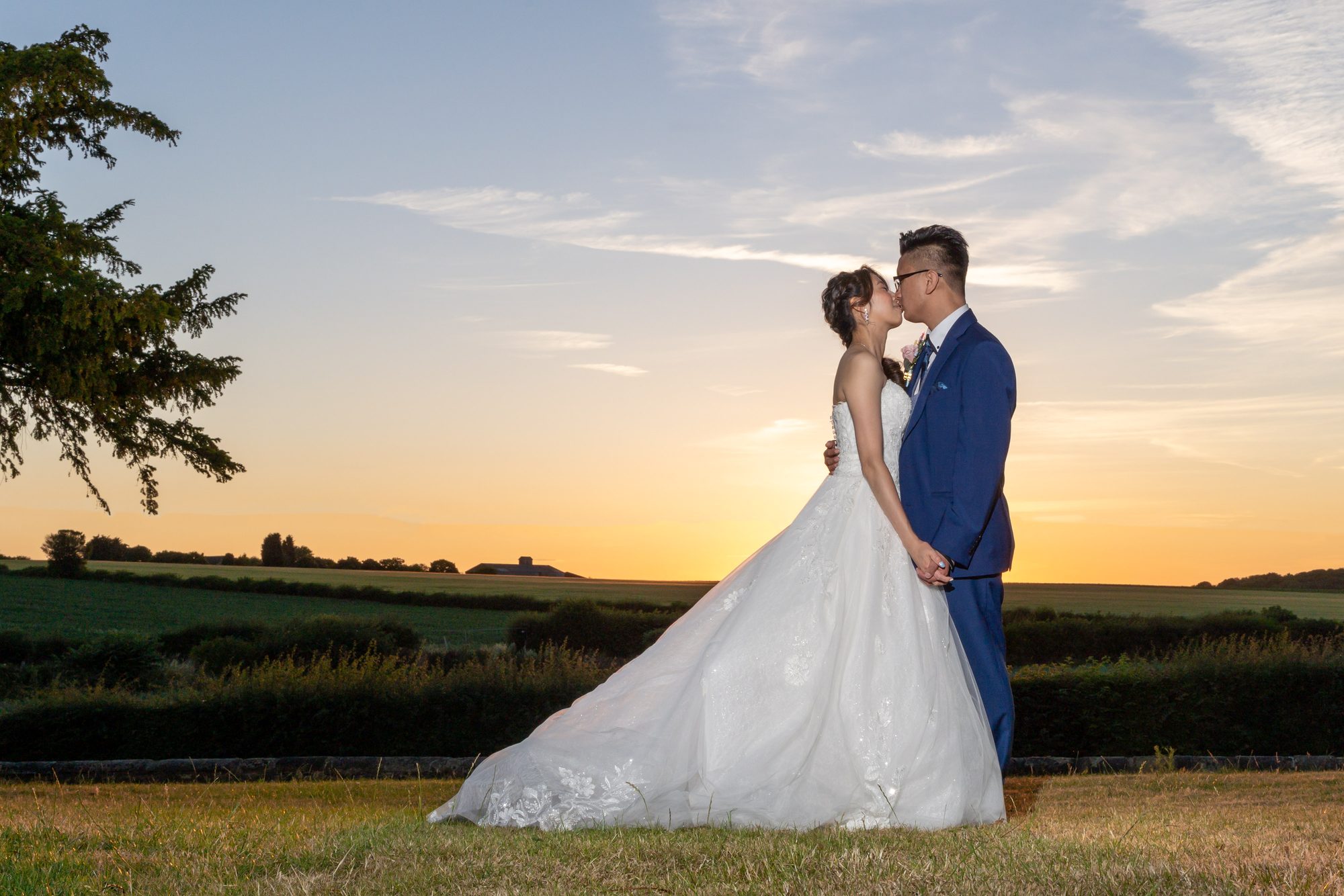
When Twilight Happens at Your Wedding
Your ceremony time gets fixed months ahead. Sunset is fixed by the calendar, and in this country it moves by nearly six hours across the year. It is worth knowing which of those you are working with before the timeline is settled.
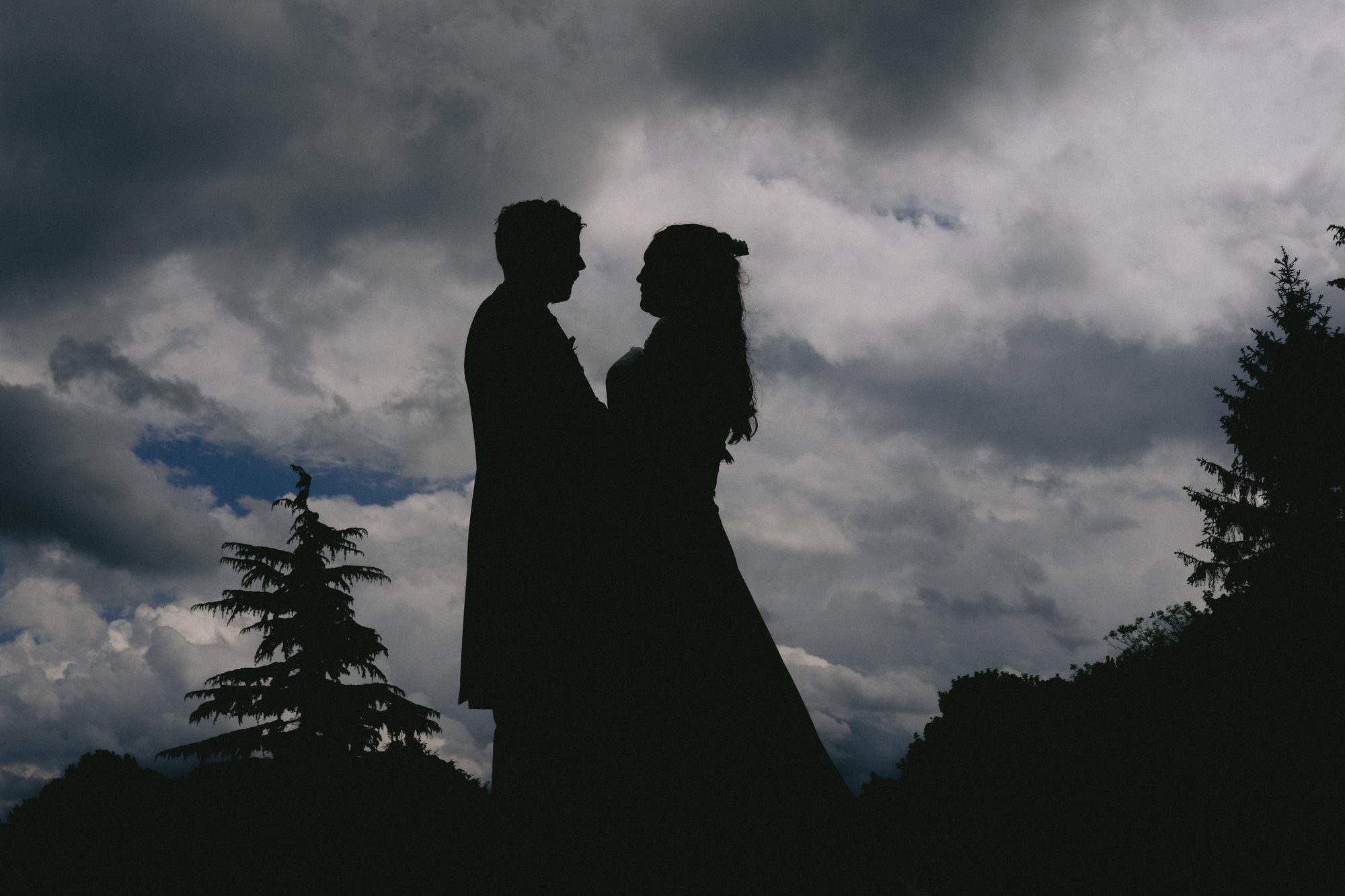
Where It Fits in Your Day
The natural slot is straight after the wedding breakfast, while the room is being turned round and everybody drifts to the bar. You slip out, we take fifteen minutes, and you are back before the evening guests have finished arriving.
The two people to tell are your venue coordinator and whoever is running the evening, your band or DJ. If sunset lands mid-speech or during the first dance it is a five minute conversation to shuffle things, not a problem. The only version that does not work is nobody knowing it was on the cards.
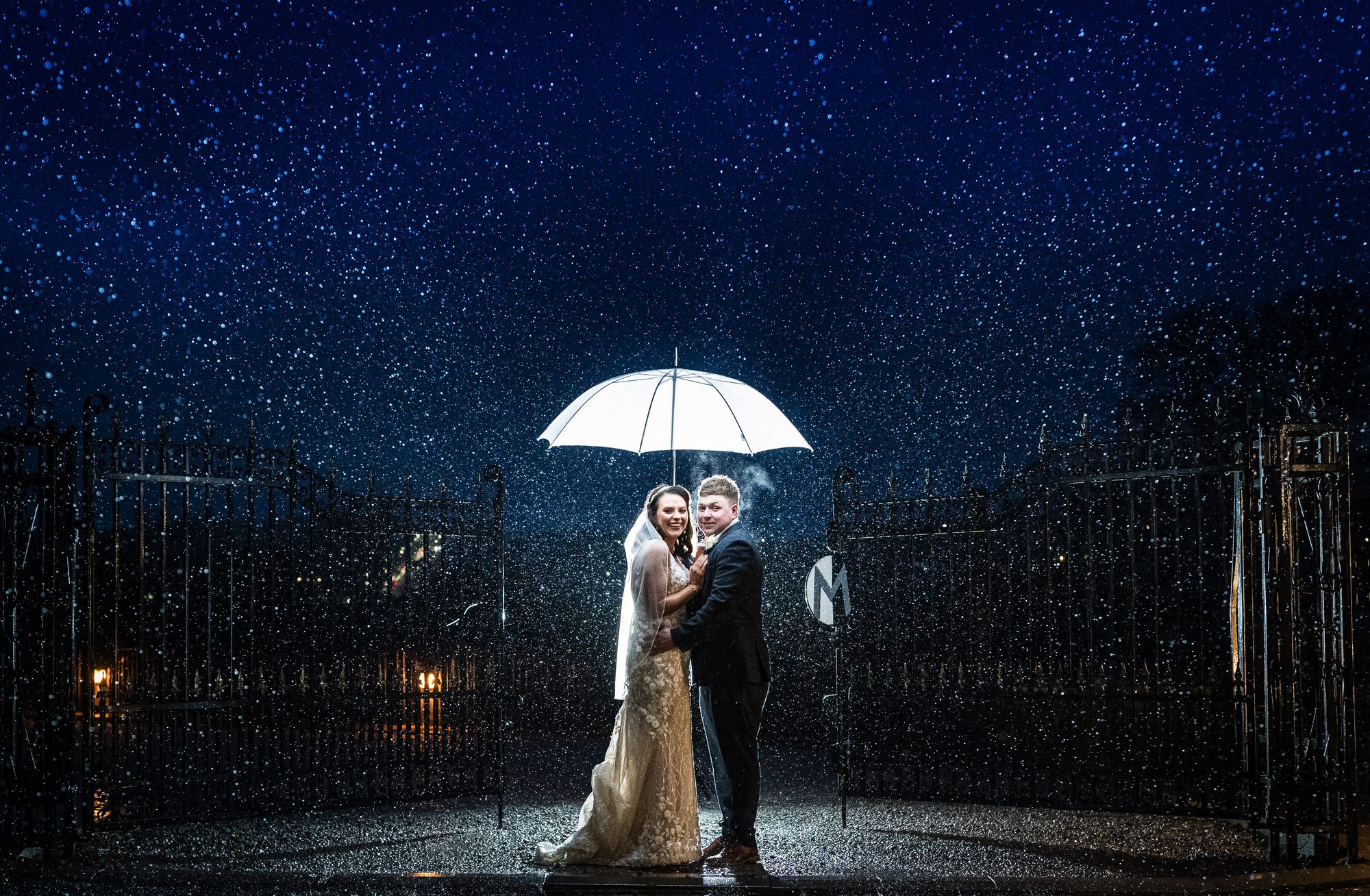
What If It Rains?
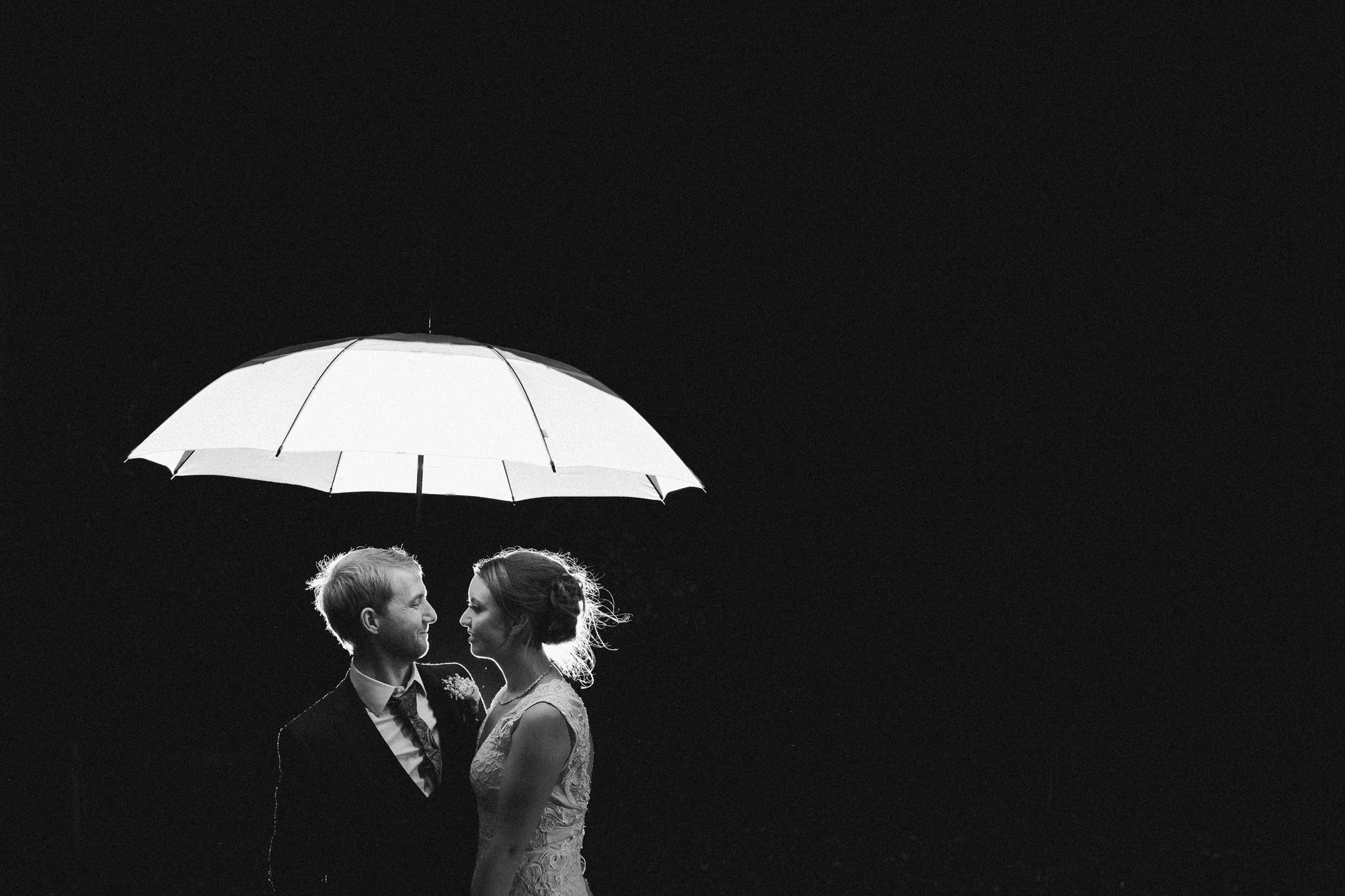
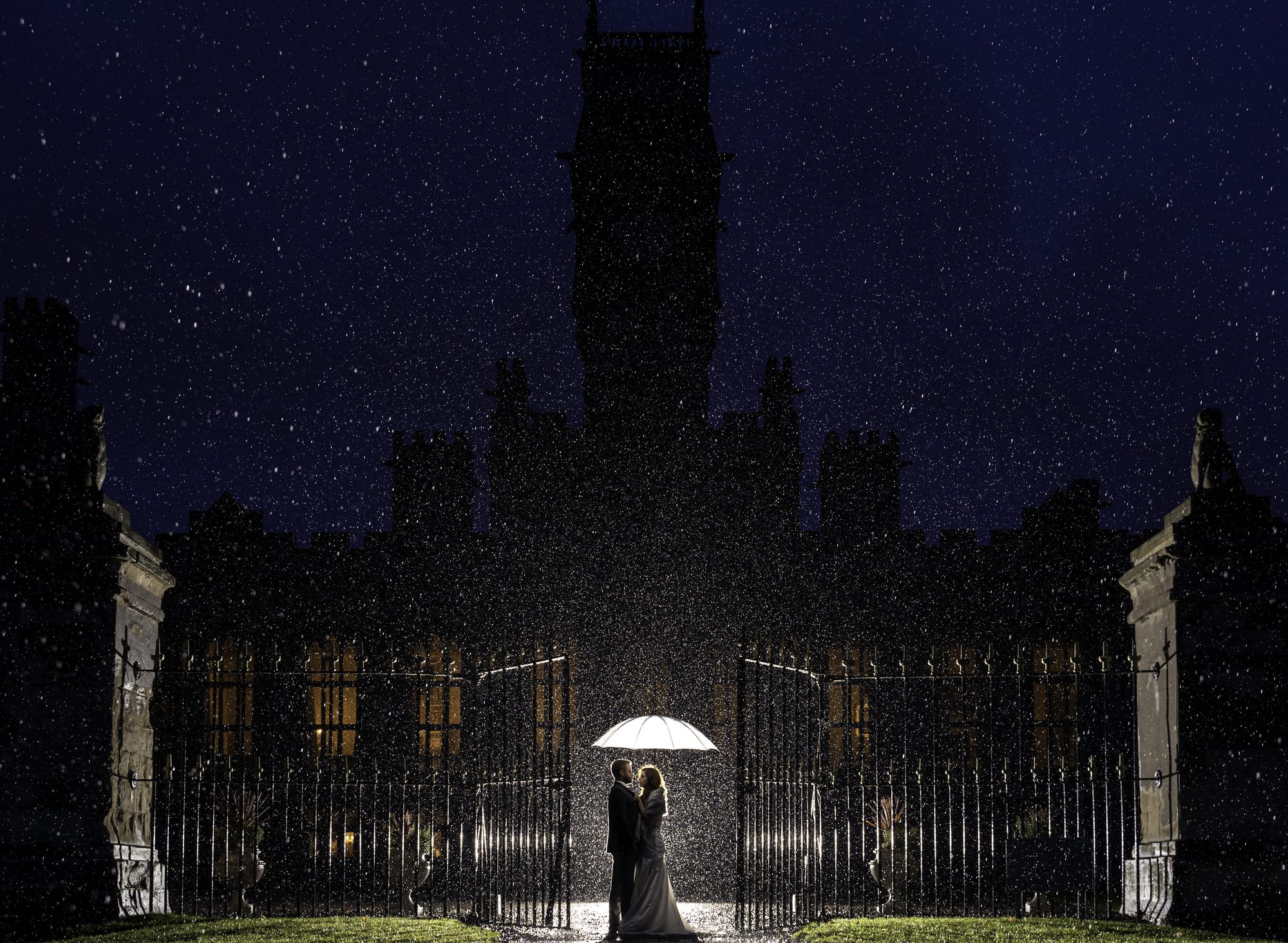
Rain is not the disaster people assume. A raindrop caught in off-camera light turns into a point of light, so a wet night gives you something a dry one simply cannot. I carry a white umbrella for exactly this, and some of my favourite twilight pictures were taken in weather nobody would have chosen.
Wind is the thing worth planning around rather than rain – it is what actually makes fifteen minutes outside unpleasant. And if the weather is genuinely impossible we use a doorway, a window or the porch, and nobody looking at the pictures afterwards knows the difference.
Sparklers, Light Writing and the Rest
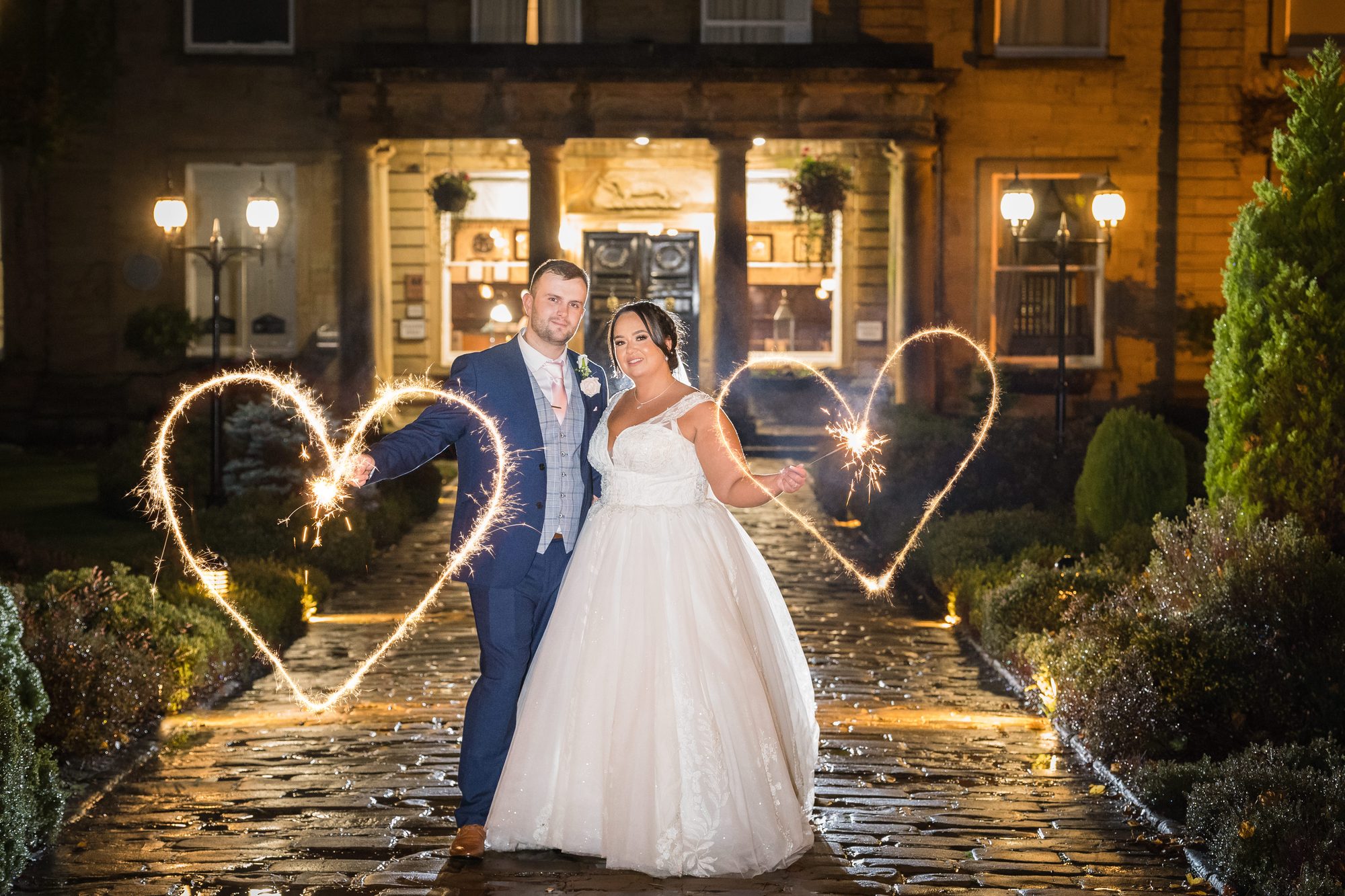
Once it is properly dark a sparkler stops being a sparkler and becomes a pen. Hearts, initials, the word “love” – it is drawn in the air over a few seconds with the shutter held open, and it takes two or three goes to get right. It is also the most fun fifteen minutes of most evenings.
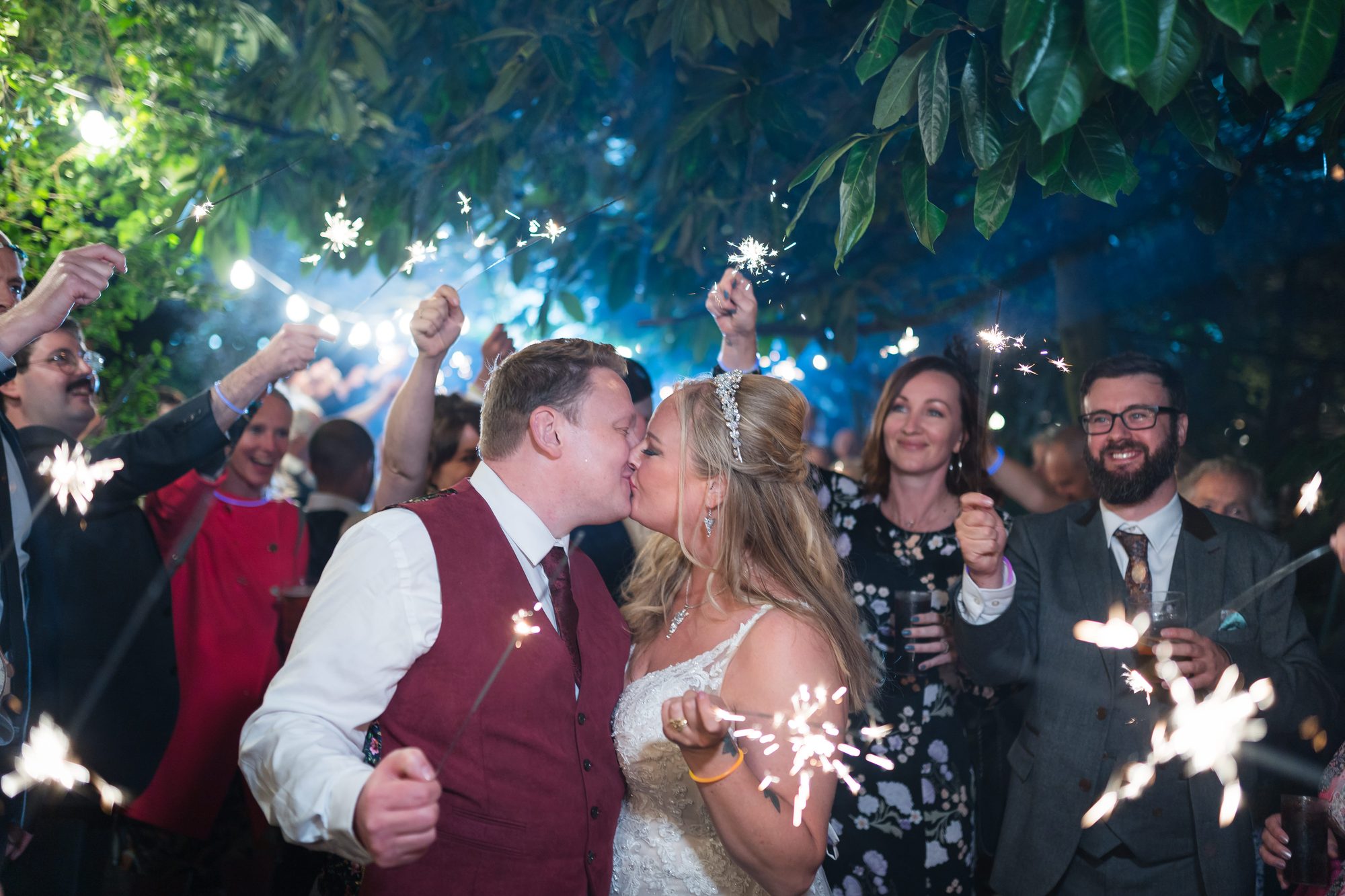
The other version is a sparkler tunnel with all of your guests, which is less about the two of you and more about the noise. Both need your venue’s blessing first, and a bucket of sand and water to put them in afterwards.
What to Tell Your Venue
Very little, and all of it easy. That you would like fifteen minutes outside after the meal. That you may use sparklers, if you want them, and where they would prefer you did it. And whether there is anywhere on the grounds they would rather you kept off after dark – some venues have lawns, lakes or livestock they are protective of, and it is far better to know beforehand.
The lighting is my problem rather than theirs. I bring what I need and I do not need power, so there is nothing for the venue to arrange.
Which Packages Include Twilight Portraits
Twilight portraits come with the Signature and Complete packages, because both keep me with you into the evening – which is when the light for them exists.
The Essential package finishes earlier in the day. On a December wedding the sun may well have gone before I leave, but across most of the year it will not have, so twilight portraits are not something I would promise on that package. If they matter to you, it is worth a look at the wedding packages before you decide.
Twilight Wedding Photography Questions
More Wedding Planning
There is more like this in my wedding planning guides – timelines, group photograph lists, what to expect on the day, and how to get the best out of the bits people worry about. If you would rather just check I am free, the button above is the quickest way.